
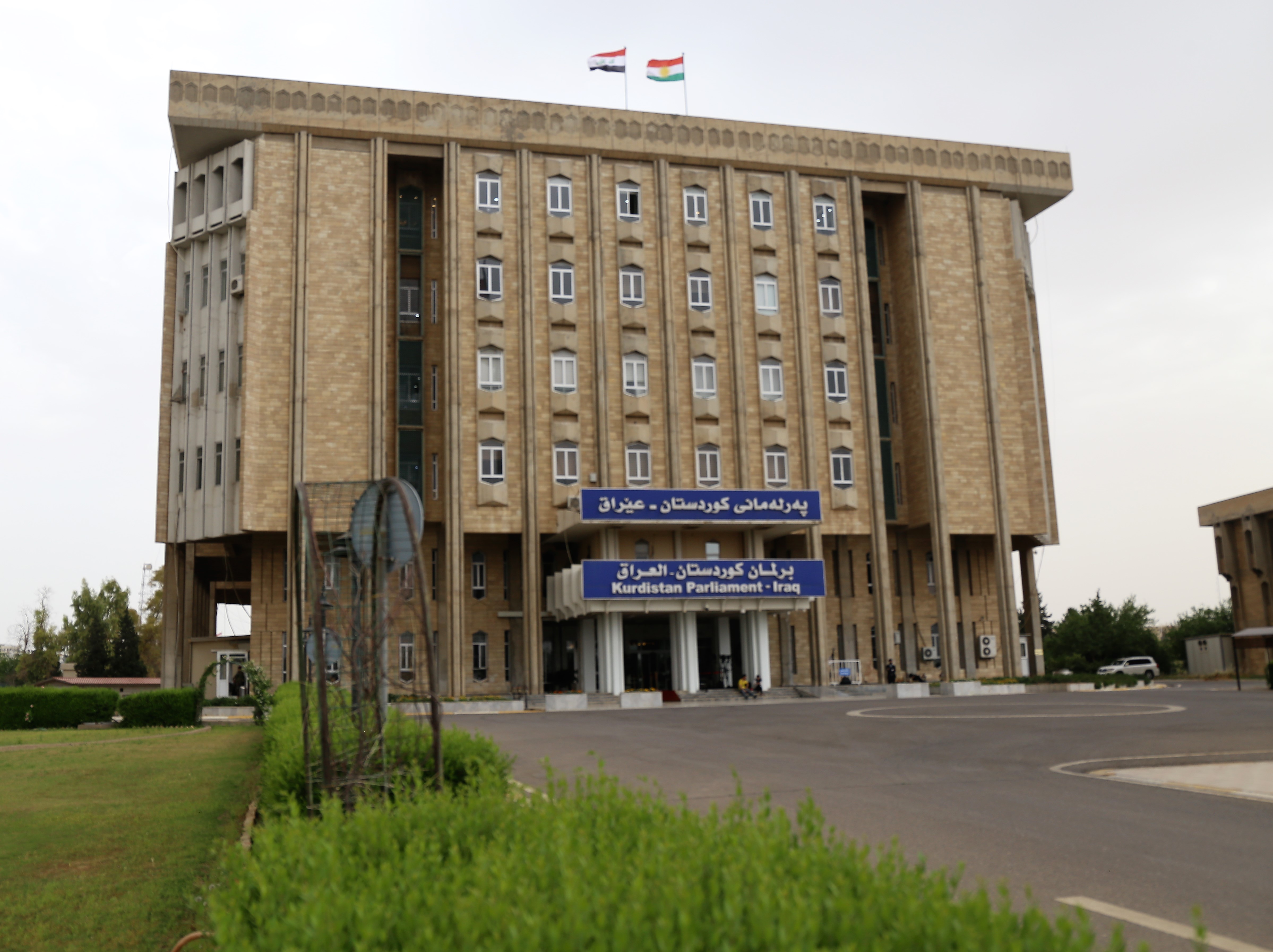
A senior Patriotic Union of Kurdistan official said Saturday that tensions with the Kurdistan Democratic Party are easing, raising hopes that talks on the Kurdistan Regional Government’s tenth cabinet could move forward. Saadi Ahmed Pira, a member of the PUK Political Bureau, said discussions between senior party delegations, and talks between Prime Minister Masrour Barzani and Deputy Prime Minister Qubad Talabani, had improved the atmosphere. “As a result of the ongoing discussions – those talks between the high-level delegations of both sides, between the Prime Minister and his deputy, and by sincere individuals who are eager for a rapprochement between the parties – the ice is now melting somewhat,” Pira said at a press conference, according to Rudaw. He said he hoped the talks would soon yield results, lead to a summit, and end the crisis. He did not set a timetable. The KDP and PUK have been negotiating since the October 2024 parliamentary election, in which the KDP won 39 seats and the PUK 23 in the 100-seat parliament. New Generation, which holds 15 seats, has said it will remain in opposition and will not join the incoming cabinet, leaving the KDP and PUK as the main parties in the formation talks.
Meanwhile, a senior figure in Iraq’s Iran-aligned armed groups sought to reassure the Kurdistan Region after the US-led coalition completed its withdrawal from Iraq. Abu Alaa al-Wala’i, secretary-general of Kataib Sayyid al-Shuhada, said the Region’s security was “inseparable” from that of the rest of Iraq and that the US departure should not be a cause for concern, Rudaw reported on Saturday. Kurdish authorities have voiced the opposite worry. The Kurdistan Region’s Peshmerga ministry said ahead of the pullout that leaving the Region without an adequate air-defense system was a “cause for concern,” stressing that Baghdad bears primary responsibility for protecting Iraqi airspace. Prime Minister Masrour Barzani has also warned that the departure comes at a critical time, citing repeated missile and drone attacks and Iran-aligned Iraqi armed groups that remain outside full state control. The final US troops left Iraq at the end of September, ending Operation Inherent Resolve in the country.
Electricity supply across the Kurdistan Region will run several hours shorter each day through 2 November while Dana Gas carries out maintenance at the Khor Mor gas field in Sulaimani province, the Ministry of Electricity said, according to 3 October reporting by The Insight International. The work began on 2 October. The ministry did not say exactly how many hours will be cut. The Natural Resources Ministry said gas production will fall from about 640 million standard cubic feet a day to about 520 million during the outage, and that household cooking gas supplies will not be reduced. Those production figures come from the ministry as reported by that outlet. Separately, Kurdistan24 reported on Saturday that Prime Minister Barzani approved five drinking-water projects meant to serve Soran, Khabat, Kalar and Koya and to expand networks in Qandil, Pirmam and Shaqlawa once financial allocations are completed. Ari Ahmed, director general of water and sewerage, told Kurdistan24 that engineering studies for the five projects are finished.
Kurdistan Region President Nechirvan Barzani marked the ninth anniversary of former Iraqi president Jalal Talabani’s death by calling dialogue, solidarity and unity the best way to honor his legacy. Talabani, a PUK founder who served as Iraq’s president from 2005 to 2014, died on 3 October 2017. Baghdad hosted a separate memorial the same day attended by Iraqi President Nizar Amedi, Parliament Speaker Haibat al-Halbousi and other political figures, according to The Insight International.
In Turkey, Vice President Cevdet Yılmaz said on 2 October that the government’s resolution process was moving forward through parliamentary and executive mechanisms, without giving a timetable for completing its first phase, SyriacPress reported. He said a monitoring committee would be set up in parliament and that results would be submitted to the National Security Council. Separately, Rudaw reported that MHP leader Devlet Bahçeli asked DEM Party mediators at the opening of parliament’s new legislative year to pass on greetings to imprisoned PKK leader Abdullah Öcalan.
In Syria, Kurdistan24 reported that the total number of Syrian Democratic Forces fighters integrated into the Syrian army has reached 5,200 after specialized training, with units deployed at Mount Kawkab, Qasrak and Tal Baydar in Hasakah province — a figure that outlet alone has given. Syrian Democratic Council Washington representative Sinam Mohammed told the same outlet that Kurdish language and national rights must be formally guaranteed in Syria’s new constitution, including official recognition of Kurdish alongside Arabic.
English-language reporting from Iranian Kurdistan on 3 October was thin beyond ongoing analysis of how Turkey’s PKK process may affect Iranian Kurdish armed groups.